
Create a DNA Family Traits Tree
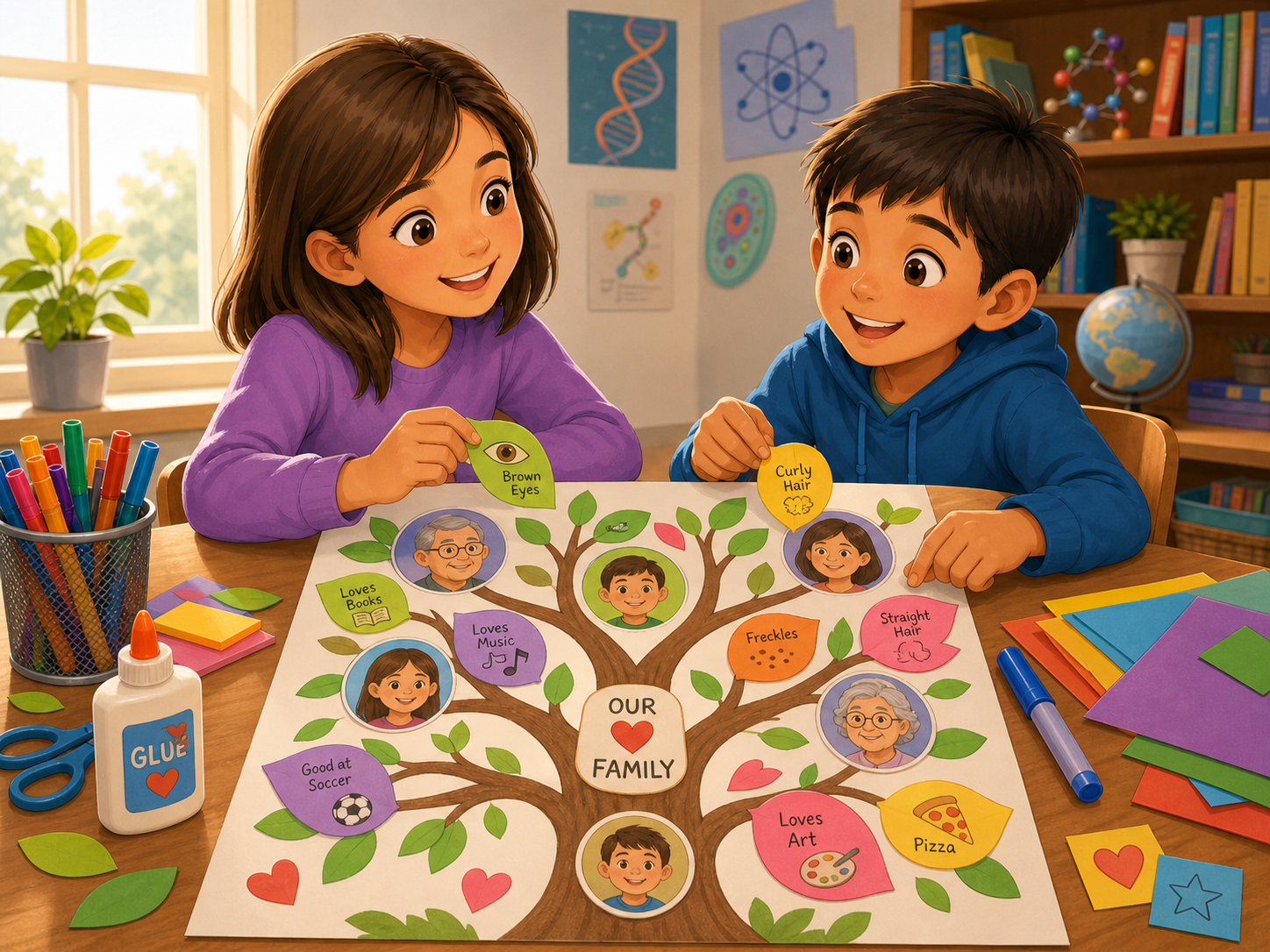
DNA helps explain how traits are passed from parents to children, from grandparents to grandchildren, and through generations. In this activity, children create a simple family traits tree to explore heredity in a gentle, age-appropriate way.
Students do not need to study private or personal traits. Instead, they can choose harmless, observable examples such as eye color, hair texture, dimples, freckles, attached or unattached earlobes, favorite foods, hobbies, or talents. The goal is to help young readers understand that DNA carries information that helps shape living things.
Image suggestion:
Jennifer and Daniel at a table creating a colorful family traits tree with leaves, branches, and simple science icons.
Materials:
Poster board or large paper, markers, colored pencils, sticky notes or paper leaves, glue, scissors, and optional family photos or drawn portraits.
Activity:
Children draw a tree with branches for family members. On each leaf, they write or draw one simple trait or interest. Then they look for patterns. Which traits appear more than once? Which are different? Which may be inherited, and which may come from environment, choice, or experience?
Reflection question:
How does DNA help connect one generation to the next?
What children learn:
DNA carries information that can influence traits, but every person is also shaped by environment, experience, and individuality.