

KEAK AUTHOR
Children’s Activities
Book FOUR
Explore, Learn, and Create with Dr. K!
Join Jennifer and Daniel on their adventures through time while exploring science and fun activities.
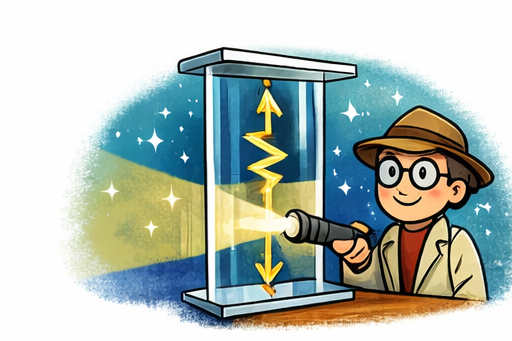
Build a Light Clock
Time feels steady, until you measure it with light. In this hands-on model, children build a simple “light clock” idea using reflections and rhythm to explore why Einstein said motion can change time.
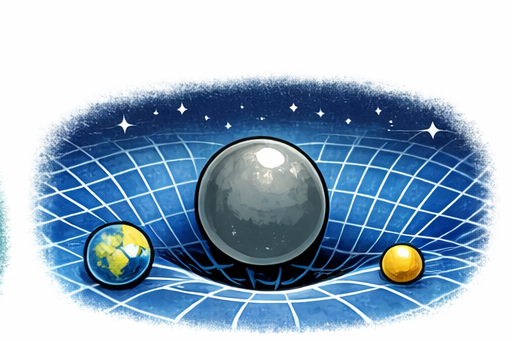
Make a Spacetime Gravity Well
Gravity is not just a pull, it can be modeled as a curve. Using a stretched fabric and round objects, students observe how mass changes paths and creates orbits.
The Coin and Paper Challenge
Einstein loved simple experiments that reveal big truths. With a coin, paper, and a glass, students test inertia and learn why objects keep moving unless something stops them.
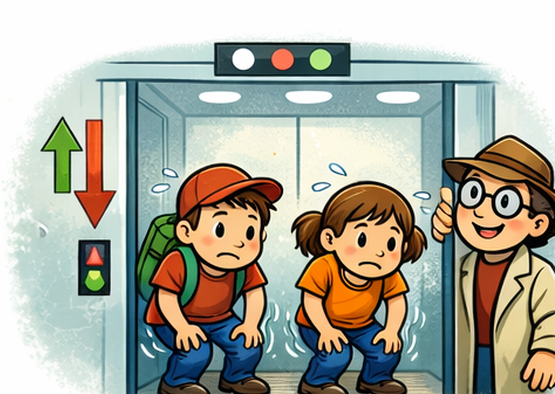
The Elevator Thought Experiment Lab
What feels like gravity can also feel like motion. Students act out Einstein’s famous elevator idea to explore the equivalence principle using safe movement and careful observation.

Time Dilation in Daily Life, The GPS Connection
Relativity is not just a theory in books, it helps your phone find you. Students learn how GPS needs tiny time corrections and why satellites are a real-world Einstein experiment.

E=mc² Energy Ledger
Mass and energy are connected in a surprising way. Students compare everyday energy examples to understand why a little mass can represent an enormous amount of energy.

Curving Light, A Lens Bending Demo
Light does not always travel in a straight line when the path itself is curved. Using safe lenses and water, students observe bending light and connect it to gravitational lensing.

Write Your Own Thought Experiment
Einstein solved problems by imagining them clearly. Students create a short “what if” scenario, then explain what they think would happen using evidence and logic.