
Curving Light, A Lens Bending Demo
Introduction:
We often imagine light as moving in straight lines, and it usually does. But light can bend when it passes through different materials, and Einstein predicted that light can also bend when it passes near massive objects because space itself is curved.
This activity uses safe materials to observe light bending, then connects that observation to gravitational lensing.
What You Will Need:
A clear glass of water
A pencil or straw
A flashlight
Optional: a magnifying glass
Paper and pencil
Step-by-Step Instructions:
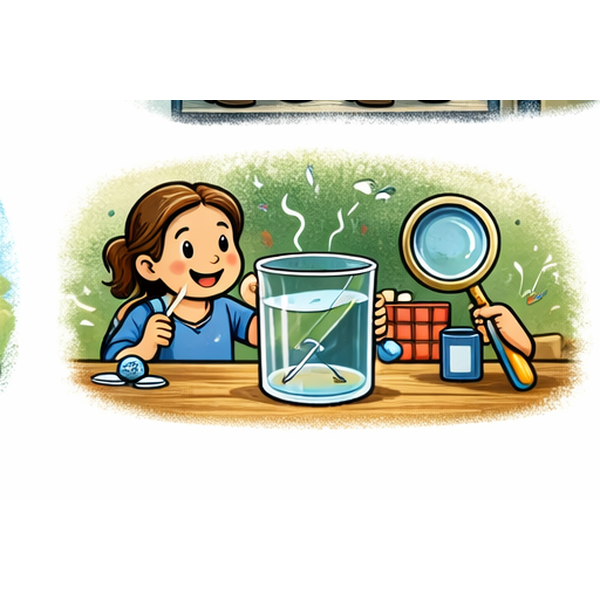
Put the pencil into the glass of water and look from the side.
Notice how the pencil appears “broken” at the water line.
Shine a flashlight through the glass and observe how the light spreads and bends.
If you have a magnifying glass, hold it near a page of text and observe the bending and magnifying effect.
Draw what you saw in your notebook.
Discuss: If glass and water can bend light, what might a star or galaxy do to light traveling through curved space?
What to Look For:
Where does the pencil appear to shift?
How does the glass shape change the light path?
Why might bending light help scientists see faraway objects?
Fun Fact:
Gravitational lensing can make distant galaxies look stretched into arcs, because the light is bent on its way to Earth.
Safety Tip:
Do not shine bright light into eyes. Keep water away from electronics.
Journaling Prompt:
Imagine you are an astronomer who sees a strange arc of light in space. Write what you think it could be and why.