
The Elevator Thought Experiment Lab
Introduction:
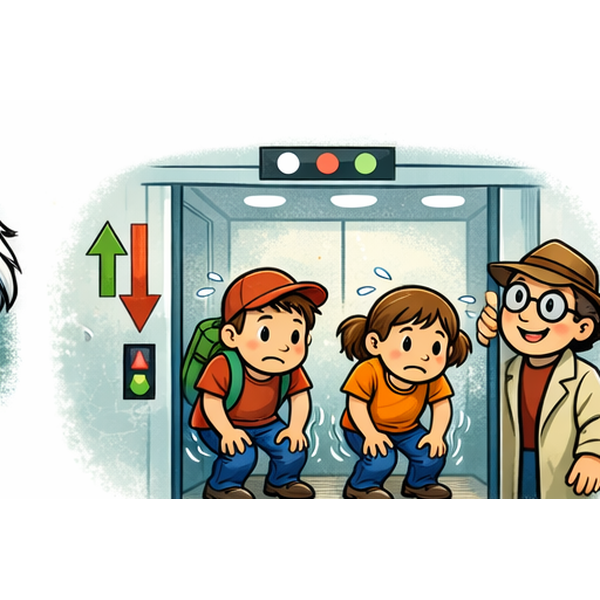
Einstein asked a famous question: “How would you tell the difference between gravity and acceleration?” He imagined a person inside an elevator with no windows. If the elevator is sitting on Earth, you feel your weight. If the elevator is in space but accelerating upward, you also feel pressed to the floor. Einstein called this connection the equivalence principle.
In this activity, students act out the idea and record what they notice.
What You Will Need:
Open space in a room
A small notebook and pencil
Optional: a lightweight backpack and a small book to create a safe “weight” feeling
Step-by-Step Instructions:
Mark a square on the floor with tape. This is your “elevator.”
Stand inside the square and describe how your body feels when you are still.
Now do a controlled mini squat and stand quickly, safely, to feel a brief “heavier” moment.
Next, do a small jump and notice the “lighter” moment at the top.
Write down what you felt, heavier, lighter, or normal.
Discuss: if you were inside a closed elevator, how could motion trick you into thinking gravity changed?
What to Look For:
When do you feel heavier, and when do you feel lighter?
How does acceleration change what your body senses?
Why might gravity and acceleration feel similar?
Fun Fact:
Einstein used thought experiments like this because they help us test ideas without expensive equipment.
Safety Tip:
No high jumps. Keep movements small and controlled, and use chairs or walls for balance if needed.
Journaling Prompt:
Write two sentences: one explaining how gravity feels, and one explaining how acceleration can imitate that feeling.