
DNA, Discovery, and the Code of Life: A Time-Travel Adventure for Young Scientists
By Katherine E.A. Korkidis
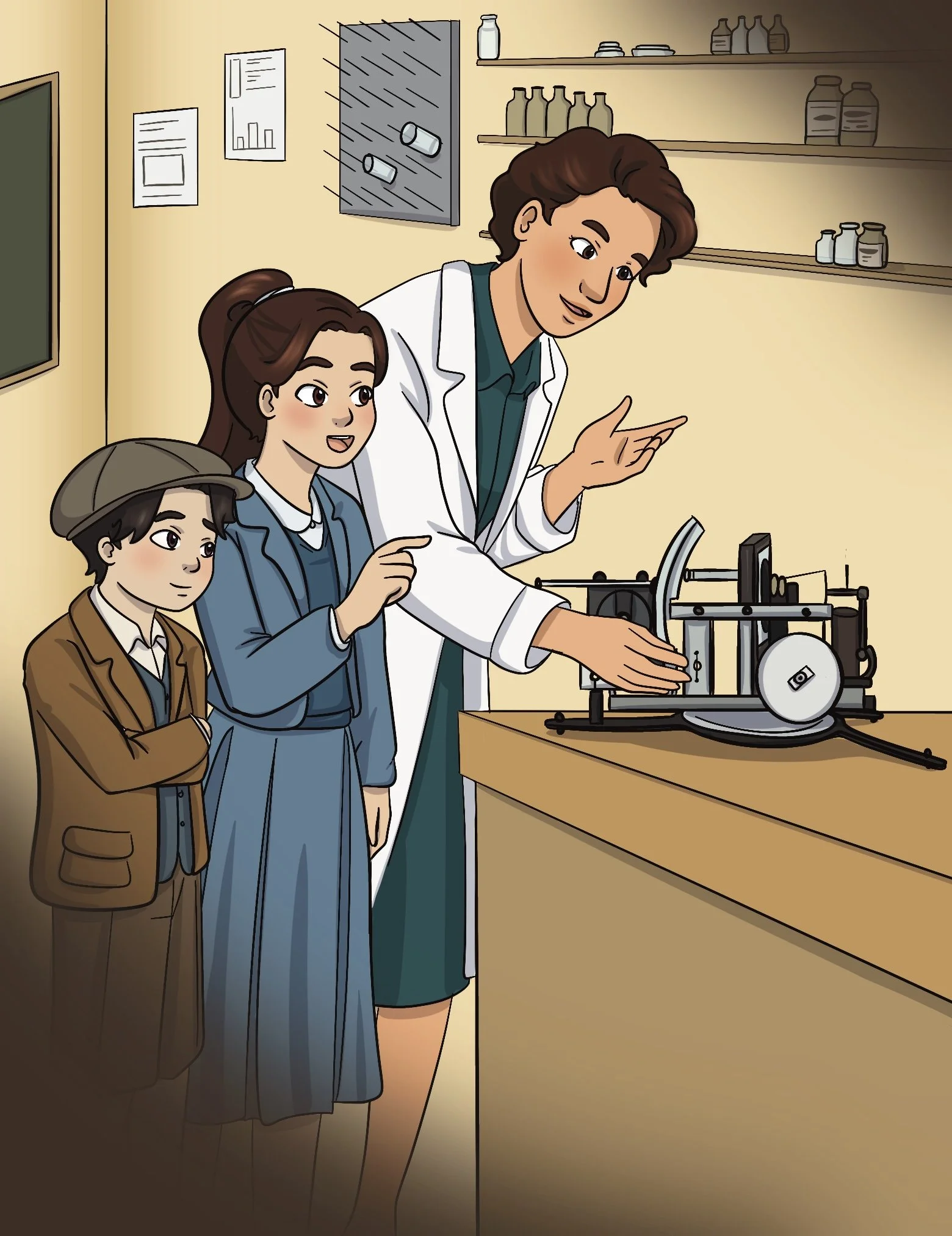
DNA is one of the most fascinating ideas a child can encounter.
It is invisible to the eye, yet it helps shape living things.
It is tiny, yet it carries enormous amounts of information.
It belongs to science, but it also belongs to every living creature.
In Rosalind Franklin’s DNA Discovery, Jennifer and Daniel begin with questions about DNA and end up traveling through time to meet Rosalind Franklin, a scientist whose work helped reveal its structure.
That is what makes the Dr. K’s Portal Through Time series so meaningful for young readers. It does not present science as distant or unreachable. It invites children to step inside the story of discovery.
In Book 5, Jennifer and Daniel learn that DNA is made of smaller parts called nucleotides. They hear about base pairs, structure, and the double helix. But more importantly, they learn why structure matters. If scientists can understand how DNA is built, they can begin to understand how genetic information is stored, copied, and passed from one generation to the next.
That concept is enormous, but the story makes it approachable.
Children do not need to begin as experts. Jennifer and Daniel are learning too. They ask questions. They compare ideas. They listen to Dr. K. They observe Franklin’s work. Their curiosity becomes the reader’s curiosity.
The book also connects the science of DNA to the history of discovery. Young readers see that scientific understanding does not appear fully formed. It develops through many minds, many tools, many experiments, and many moments of careful thinking.
Rosalind Franklin’s use of X-ray diffraction becomes especially important. Her images offered evidence that helped scientists understand DNA’s shape. The famous Photo 51 showed a pattern that contained clues about the double helix. In the story, Jennifer and Daniel learn that such evidence must be interpreted, not simply admired.
That distinction matters.
Science is not only about seeing. It is about understanding what you see.
For readers ages 8–12, Book 5 offers an exciting bridge between adventure and real science. It brings together time travel, laboratory discovery, biology, and history in a way that encourages children to keep asking questions.
What is DNA?
How does it carry information?
Why does its shape matter?
How do scientists study something too small to see?
These are not small questions. They are the kinds of questions that can open a child’s imagination.
And sometimes, that is where discovery begins.