
Why Patience Matters in Science: Lessons from Rosalind Franklin’s Laboratory
By Katherine E.A. Korkidis
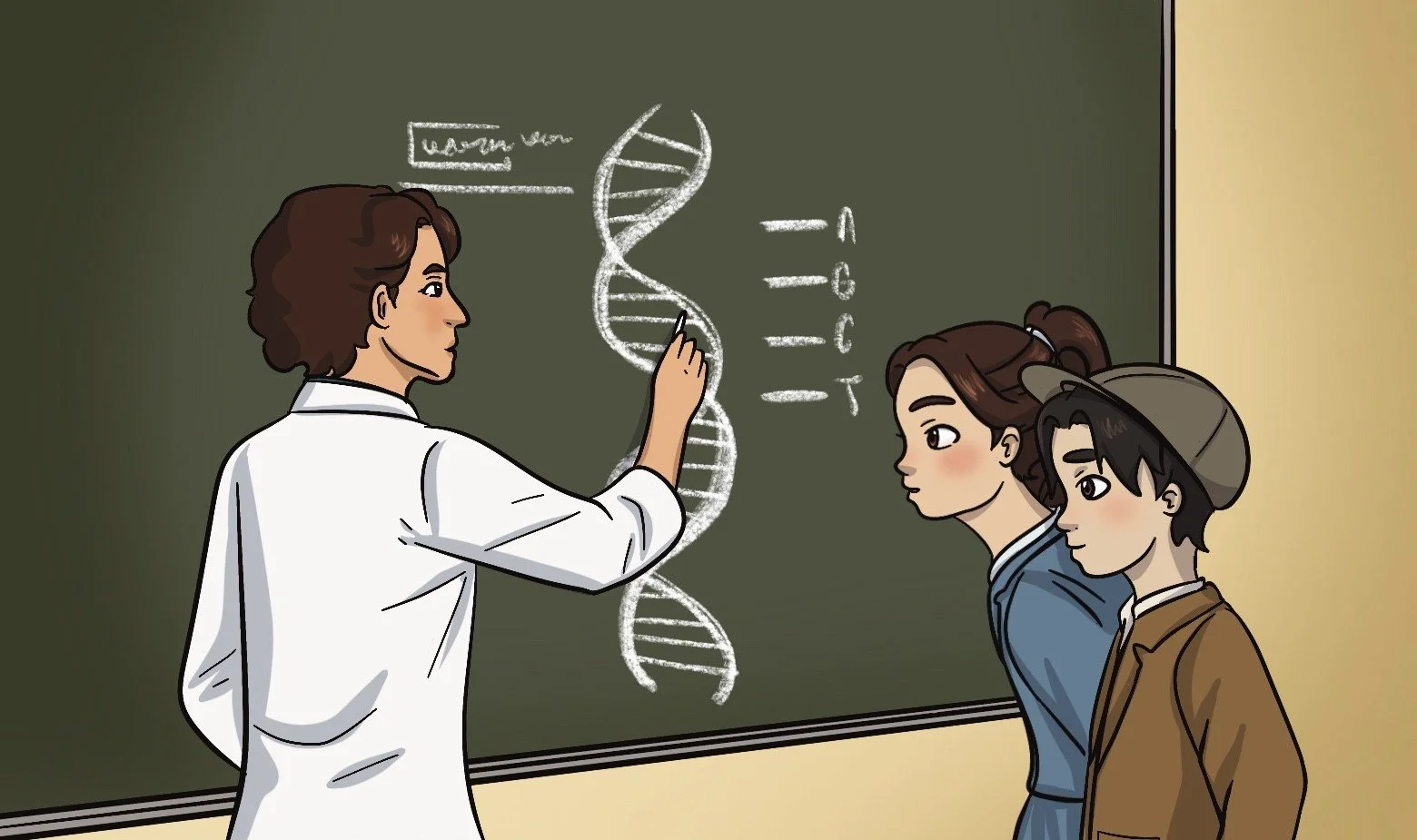
Children often imagine discovery as one bright moment.
A scientist shouts, “I found it!”
A machine flashes.
A mystery is solved.
Real science is usually much quieter than that.
In Rosalind Franklin’s DNA Discovery, Jennifer and Daniel learn this lesson when they visit Rosalind Franklin’s laboratory at King’s College London. They enter expecting wonder, and they find it, but not in the way they first imagined. The wonder is in the careful work.
Franklin’s research required discipline. She prepared samples. She controlled conditions. She studied patterns. She checked results. She did not force the evidence to say what she wanted it to say. She allowed the evidence to guide her thinking.
That is an important lesson for young readers.
Patience in science is not passive. It is active. It means staying with a question long enough to understand it. It means trying again when the first result is unclear. It means noticing small details that others may miss. It means respecting the process as much as the answer.
Jennifer and Daniel see that Franklin’s work with DNA was not the result of luck. Photo 51 did not appear out of nowhere. It came from careful preparation, technical skill, and persistence. One clear image represented many hidden steps.
For children, this is a powerful message. It teaches them that struggling with a problem does not mean they are failing. It may mean they are doing the real work of learning.
In school, science can sometimes feel like a collection of finished facts. DNA has a double helix structure. Bases pair in certain ways. Genetic information can be copied and passed on. But before those facts became part of textbooks, scientists had to ask hard questions and gather evidence.
That is why Rosalind Franklin’s story matters.
She shows children that science is not only about being brilliant. It is about being careful. It is about being honest with the data. It is about continuing when the work becomes difficult.
Through Jennifer and Daniel’s time-travel journey, readers begin to understand that discovery has a rhythm. Observe. Question. Test. Record. Think. Revise. Continue.
That rhythm belongs not only in laboratories. It belongs in classrooms, in homework, in creative projects, and in life.
Rosalind Franklin’s laboratory reminds young readers that patience can be powerful. It can reveal what rushing would miss. It can turn uncertainty into understanding. It can help a quiet question become a world-changing discovery.