
Build a Light Clock
Introduction:
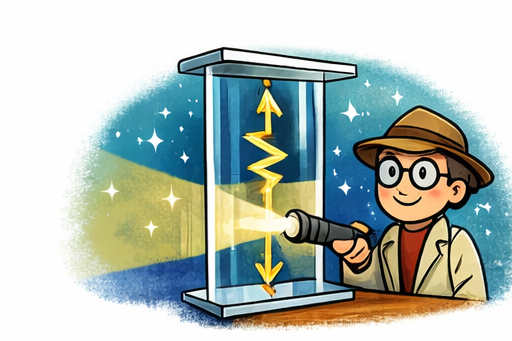
Einstein discovered something strange about time. If you move very fast, time can pass differently than it does for someone standing still. That sounds impossible at first, because we all feel time the same way. To understand why Einstein made this claim, scientists use a simple model called a light clock. It is not a clock you buy, it is a thinking tool that uses light bouncing back and forth to count time.
In this activity, students build a physical model that helps them imagine a light clock. They will use reflections and steady counting to understand how scientists turn an invisible idea into a clear model.
What You Will Need:
Two small mirrors (or two pieces of aluminum foil taped flat to cardboard)
A ruler
Tape
A small flashlight (or phone flashlight)
A notebook and pencil
Optional: a darkened room for a clearer reflection
Step-by-Step Instructions:
Place your two mirrors facing each other about 6 inches apart. Tape them so they stay upright.
Shine the flashlight toward one mirror so the light reflects toward the other mirror.
Adjust the angle until you can see the light bouncing back and forth.
Choose a counting rhythm, such as one count per bounce you observe.
Now imagine the mirrors are inside a spaceship moving very fast. Ask: would the light still bounce straight up and down from the viewpoint of someone outside the ship?
Draw two diagrams in your notebook:
One where the light goes straight up and down between the mirrors
One where the ship moves sideways, so the light travels a longer diagonal path
In your notes, explain which path is longer and what that might mean for “ticks” of time.
What to Look For:
Does light take a longer path if the system is moving sideways?
If each bounce is one tick, what happens when the path is longer?
Why might longer travel time for light mean time itself appears to slow down?
Fun Fact:
Einstein often explained ideas with thought experiments, imaginary experiments done in the mind, because the real experiments were not always possible at the time.
Safety Tip:
Do not shine the flashlight directly into anyone’s eyes. Point the beam at the mirror and keep it angled away from faces.
Journaling Prompt:
Write a paragraph that begins with: “If time were measured by light, then…” Explain how a longer path could change what a clock measures.